

Obsession
Are you in a healthy orbit around your work, or plummeting toward it at top speed burning up as you go?

I’m stuck.
Not stuck in place. Not stuck in terms of ideas. It’s more like there’s a setting somewhere inside me that’s been switched on, but it’s now a little busted and won’t turn off. There’s a conductor in my brain, and he got stuck at a specific part, baton raised mid-wave, and the confused orchestra is left playing the same note forever. The poor wind players. Their circular breathing is getting increasingly desperate.
This is what obsession sometimes feels like to me. It’s this state of being where all your mental attention is being relentlessly drawn to a specific thing’s hyperbolic demands.
Right now, specifically for me, that’s the next How to Make Epic Music episode. I’m thinking about it constantly. I’m struggling to work on other things. I’m re-writing sentences and plotting out audio in my head at the dinner table. It’s really fun and creatively satisfying — but also I find myself getting annoyed when something comes up that forces me away from it, like, you know, drinking a glass of water or being present in the moment.
Herein lies the double-edged sword of obsession. Being obsessed with a project can breed immersion and flow. When I’m obsessed with an idea, I read everything I can about it. When I’m obsessed with a song I’m working on, I’ll stay up late working on it without getting tired. It can be endlessly fertile territory, a fount of creative fuel that means I’m working on something challenging and interesting. The way obsession elbows its way into the room, it’s too big a personality to allow space for doubt, insecurity, or ego, who cower before its enthusiasms.
Obsession is the ultimate answer as to why someone makes art or music despite the many callous rejections and indifferences of society and the array of obstacles to doing so. As Rilke would say, it’s because you have to! It’s the demonic little idea inside you that’s pummeling the walls to get out, the Athena that simply has to be released from Zeus’ throbbing temple for the god not to fry the world with lightning.
In my creative process, obsession can act like a massive space telescope. It allows me to focus in on and map out a specific part of the night’s sky, and invariably this tiny slice of space ends up so full of foreign bodies as to engage and engulf all my faculties. If one planet can be as rich as ours, then imagine what’s out there in one small section of infinity? In other words, I love what sustained attention can uncover.
There’s a flip side of course. If my telescope is only focused on one specific part of the sky, it might miss the meteor shower in another part. I see this very clearly with my 8 year old son who inherited my tendency to obsession (don’t you love how your kids can serve as a mirror on your own tendencies?). It’s virtually impossible to get him to focus on something outside his current interest, including such things as putting on clothes, participating in group activities, or learning something his teachers want him to learn. But we push because sadly, there are times in life when you do need to think about things other than what kind of Viking you would be or how Hannibal’s forces were arranged at Cannae or the shape of archipelagos.
Obsession is great for projects, for flow, for curiosity, for productivity, even for discovery. It’s terrible for breadth, for receptivity, for wholeness, for presence, for relationships. That last one is the kicker. When I’m obsessed with something, I tend to not be the most responsive to others, or if I am, I’m only giving them half my attention. They are surely worthy of more. It can feel a bit like a superpower that exacts a price every time you deploy it.
And of course, sometimes you get obsessed with the wrong things: Replaying a conversation in your mind again and again, struggling to move on from a negative, or imagining all the things that could go wrong in a situation, rather than what could go right. I had someone recently suggest that sticking your hands into an ice-drawer can physically jog your brain out of an obsessive narrative, a sort of reset shock to the system. I tried it once, and I’m into it. At the very least, the absurdity of your partner coming home to find you with your hands in the ice maker should do the trick.
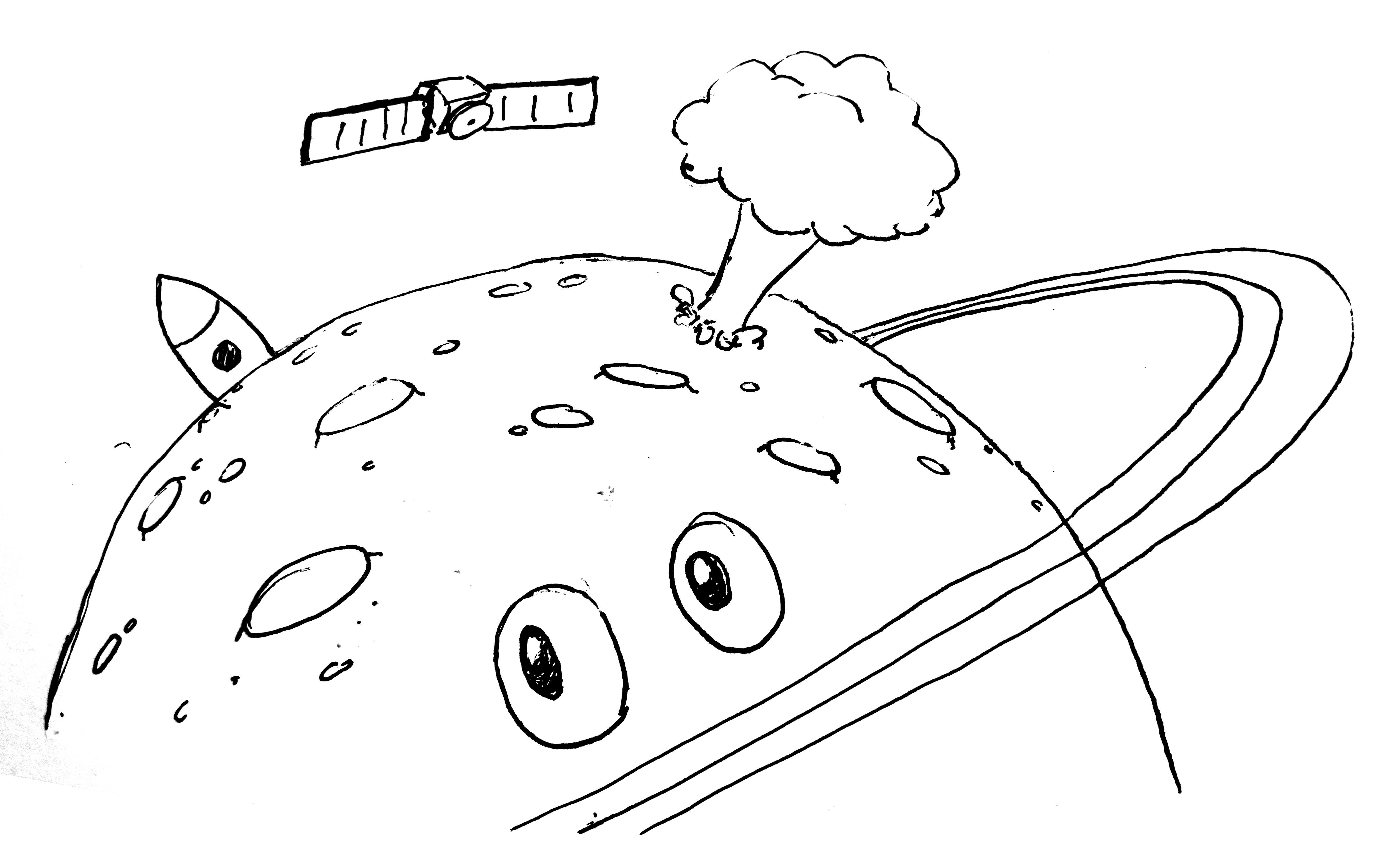
So how should artists think about obsession? Honestly, for many of us, it might not be a choice. Being a creative sometimes necessitates toppling into an unhealthy obsession with your work. Our work has gravity, and that gravity pulls us in. And I’m not convinced that’s always bad. It leaves us electric with purpose, willing and able to charge ahead undaunted by commercial and practical considerations. That can be beautiful! Especially if we can use its gravity to settle into a healthy orbit.
But obviously, too much, too narrow, too deep, and too often can hollow out your art, your relationships, your perspective, and your life. When an obsession prevents you from drinking water, you’ve probably come in too hot and crashed into the planet. (Relatedly, I’ve written about dealing with healthy and unhealthy perfectionism in the past.)
While doing a little research on this topic, I stumbled upon this article in The Marginalian about the sci-fi writer Octavia Butler, with the following quote:
Prodigy is, at its essence, adaptability and persistent, positive obsession. Without persistence, what remains is an enthusiasm of the moment. Without adaptability, what remains may be channeled into destructive fanaticism. Without positive obsession, there is nothing at all.
Persistence, adaptability, and positivity — a welcome rubric for how to ensure an obsession is generative and supportive, rather than parasitic. In the same article, the author prints a short poem Butler wrote on the same concept:
Love quiets fear.
And a sweet and powerful
Positive obsession
Blunts pain,
Diverts rage,
And engages each of us
In the greatest,
The most intense
Of our chosen struggles.
An obsession is defined by what you’re obsessed with and how you approach it. Let it bias toward art, love, beauty, relationships, and the endlessly surprising details of life itself, rather than perfectionism and self-criticism. And if you find yourself a little obsessive about your work, you could feel guilty about that — or you could consider how lucky you are to care so deeply about what you’re doing.
I’ll take the latter approach, and I hope my son does as well.
Obsessively yours,
Ian
Ian Temple
Founder, Soundfly
ian@soundfly.com
Support My Work
I’m hard at work on the next episode of How to Make Epic Music. I’m having so much fun making this series, but also putting a lot of time and care into it. No AI writing or music or whatever — 100% hand-crafted human creativity.
If you enjoy my weekly essays or Episode 1 of the series, please consider supporting me! This is a one-man show, and your support means the world. I’m opening up the discount again before Episode 2 drops…
Five Interesting Things
New course out!!! It’s a Basic Harmony course for pianists, by my friend and course partner Kiefer. Best of all, this one is mostly free ($10 for the 2nd half to test your commitment). It’s a mini-course but there’s enough here to keep you busy for half a year or more. Check it out.
Poetry. Speaking of The Marginalian, I’m loving these little hand drawn cards of birds with collage poetry on them made by Maria Popova. Today’s card:
“have great patience
with all attempts at changing
for patience is respect
bestowed on the present
and a kindness to time.”Listening. Congratulations to Drum & Lace on a beautiful new EP called Terra, out now and sincerely worth a listen. Drum & Lace uses all sorts of synths, pedals, field recordings, and drum machines along with her voice to craft these beautiful, lush soundscapes, some of my favorite electronic music. She discusses the inspiration and equipment behind the EP here.
Reading. How much can you learn about the culture from song requests at a piano bar? That’s the question Chris Dalla Riva and Jesse Rifkin set out to answer with an impressive amount of data to back it up. Honestly, how Jesse kept track of the data on these requests as they were happening is impressive.
Reminder. That’s all I got this week… although, if you haven’t already, please go check out my deep dive into Chopin, his Raindrops prelude, and what makes it so epic here. Skim it! Put on the playlist! Download the audio and listen on your run! All the options!
I deeply relate with this feeling so this was super inspiring to read - much food for thought! And thank you so much for the generous shoutout for Terra EP!!! <3