

Tending your creativity
How do you force yourself out of your default modes? A framework for pushing yourself creatively.

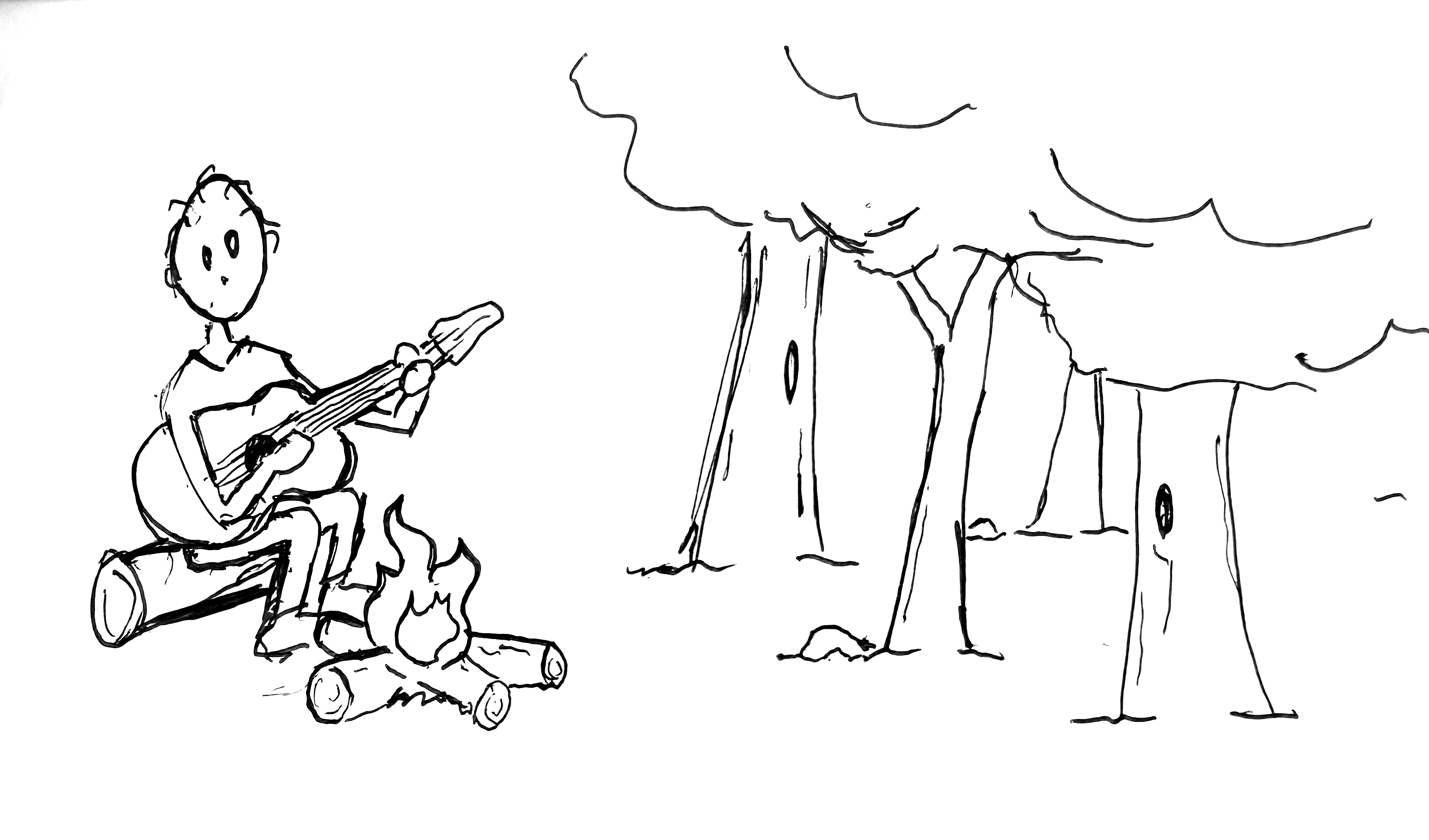
Being creative is not a routine act, but it requires a good routine to access.
You wake up and decide, I'm going to be creative today. I'm going to wrestle with life's many dimensions in a way that's impish and playful. I'll make my pleasantries dance in every conversation. I'll whip up worlds of imagination and hilarity for my kids. And when I sit down to create stuff, I'll dive into exciting new territory, pulling forth ideas with delighted abandon.
And then the day begins, with the weight of massed inertia behind it. The clawing urgency of each mundane administrative duty or to-do item calls out for my attention. How do I creatively engage with getting to school when we're already 5 minutes late? With responding to notifications or replying to emails from customers or clients? With digging through the backlog of tasks and to-dos?
In the moment, pragmatism dictates the state of play, and before you know it, you've marched through another day having done your best and found joy in moments and made some incremental progress on your many projects — but without the true creative bursts you were angling for.
Because of course, this is what most of life is, this mostly passive experience of continuing on through the structures of the life you've landed upon. We rely on the default settings because it's too complicated not to within the vast flowing architecture of each day. The world we encounter is a wriggling, thriving mass of subatomic particles and stopping by the grocery store on the way home to pick up milk. Default settings and routines keep us sane.
In some ways, my relationship with the piano feels like a great analogy. I've been playing for 35 years. When I sit down in front of it, there's a default way to engage I've come to know — the familiar patterns and chords, the fingers nestling so easily into their usual shapes. It's so comfortable, a gift for when what's needed is escape and piece of mind and flow. I'm so glad I have this.
But there are other times when that ease can be corrosive. It's that same ease that makes it possible to play constantly and consistently for years without writing anything new or getting better, such that you wake up in a few years to discover you're sitting at a bed of embers rather than the blazing fire you once dreamed of. The embers are still warm, but if you could just drag your lazy carcass away from the heat for a second to gather some more wood from the dark and mysterious forest, well, imagine where you’d be.
The lesson here is this: Your creativity requires tending.
And sometimes it requires force and discipline and practice and an aggressive posture against the endlessly helpful normalcy we rely on each day. To stay creative, in my experience, requires constantly prompting yourself into disrupting your defaults.
Because of this, a big part of the job of being an artist or musician is to craft a series of structures that force you into novelty, into action, into paying attention to your defaults and casting them aside, into not allowing yourself to ever be too settled. What will make you uncomfortable today? What's going to prompt you into trying something new, into forcing a few flavors together you've never experimented with before? What’s going to push you to the edge of your ability with all the ensuing uncertainty that goes along with it?
One of the best ways to do that in my opinion is through collaboration and interaction. It's amazing how often talking with someone else illuminates flaws and opportunities in your narratives. And of course, having to respond to the intrusions of someone else's ideas and wit into your own bubble forces a certain improvisatory creativity all its own. It’s what my friend Ewa Łączkowska means when she says “Where two meet, things come alive.”

But there are tons of other ways as well: Using new gear and instruments, interacting with constraints, exploring new lenses, engaging with exciting books and art and music, finding new ways to focus, writing stuff proactively in your head before you sit down at your instrument, etc.
In fact, it’s this architectural impulse toward prompting proactive discomfort that inspired me to come up with my Draft // Echo group. The idea is to create these little five week structured sprints where musicians can come together to be a little more mindful of their creativity. Everyone commits to a clear creative goal or practice each week, with social accountability and sharing and support to get to it. I’m announcing the next session now, to start at the end of July, so feel free to sign up.
As part of it, I’ve also developed my own little “creative curriculum” — a series of topics, tools, and provocations aimed at shaking up one’s process a bit. This framework allows me to shrink the creative process into smaller elements that I can play with to challenge myself. Here’s a high-level summary:
1. Inputs:
This is the stuff you consume, the fuel for your fires. I have this theory that one of the things that separates the best artists from the rest is the amount of dedication they put into their inputs. When I was running a songwriting course with pop artist Betty Who, she could rattle off lyrics to thousands of songs on command. My partner the pianist Kiefer does the same thing with chord progressions, transcribed solos, and jazz standards. It’s really easy to let this sort of active consumption of new influences and inspirations fall by the wayside, especially when you have a busy schedule, but it’s hugely important to creativity.
So, the first provocation is something like: What are you taking in right now? Who and what are you learning from, and are you being intentional about it? And more importantly, is it a regular part of your process?
2. Ingredients:
This is your vocabulary — the instruments and tools you use, the stylistic traditions you’re drawing from, and the skills you develop. It’s really easy to fall into default mode about our ingredients, to assume they’re constant and limited, when actually we have this vast kitchen piled high with options to cook with, and the possibility of acquiring or creating more at any time. Being intentional about your ingredients opens up all sorts of new creative doors, whether it’s limiting yourself to only one ingredient or coming up with a specific palette for a project or finding a new way to express an old idea.
The second provocation is: What ingredients do you have available to you, and what specific combination of ingredients will you use to draw out your creativity today? What happens if you change your ingredients?
3. Ideas:
Staring at a blank piece of paper is often the hardest part of the creative process, so what techniques and approaches can you draw on to inspire lots of ideas? To me, this is mostly a structural problem — making sure you’ve got the right set of tools, constraints, prompts, games, and rules handy so that you can shrink the challenge and quiet the super-critical part of your brain. To me, it’s a combination of creating structures that allow you the mental space and flexibility for ideas to bubble up, and coming up with inspiring constraints to help you generate lots of idea “seeds,” as Rick Rubin calls them, in the moment.
The third provocation is: How can you set up the right structures such that coming up with new ideas is easy, fun, and abundant? What techniques and constraints do you use to generate ideas?
4. Edits:
This is the part of the process where you’re engaging with what you’ve already done to review and modify it — and hopefully make it better. I like thinking of editing as a separate stage of the process than coming up with ideas because, for me, reacting to something is generally easier than coming up with it in the first place. By making this explicit, it allows my initial ideas to be bad, because I know I’m going to edit them later.
To challenge myself, I’ve come up with a few different archetypes of editors based on writers I’ve studied (Vonnegut, King, Kerouac, and Asimov), and I like exploring how their different approaches to editing can unlock different creative impulses within me. I’ve probably gotten more value from re-thinking this stage of my process than anything else on here.
The fourth provocation is: What type of editor are you? What happens if you change your approach to editing your work?
5. Agitations:
This is maybe the most delicate one, but agitations are the part of the process where you interrogate your work and challenge yourself to make something unique and interesting, something that stands out from the noise. It’s about the pursuit of surprise, depth, and originality — about having something to say. I say it’s delicate because it’s easy for the obsession with originality to halt you in your tracks. Often times, the best way to find your unique sound is simply to trust the process you’re on. That said, there are also ways to push yourself along the way, and I like trying to find the right balance.
The fifth and final provocation is: What are you doing that’s unique, that stands out, and that feels like it’s adding something new to the world that has to exist?
What do you think? Do any of those concepts feel more relevant to how you approach your creative process? Feel free to play around with them a bit this week, and see if anything opens up for you.
A couple years ago, I did a big study of Renaissance Florence for fun. I was curious how this small-ish Italian city briefly came to be the financial and cultural center of the world.
One of the interesting takeaways that stuck with me was that the city seemed to have just the right amount of instability. There was enough freedom for artists and weirdos and people who thought differently to find space to operate in, but not so much anarchy that they were all killed or scared into silence (for the most part). When that changed, when anarchy ramped up too much or too much order was imposed, it all ended.
I wonder whether in some ways we artists aren’t the same. Too much order and stability, and there’s nowhere for the creativity to come from, for the unexpected to gurgle forth and flood the land in torrents of moving originality. Too much instability and we can’t get anything done, we’re stuck in the mud, wrestling with ourselves and our inner critics, rather than sharing our art with the world, and letting it touch people in ways we might never expect.
So, what’s the right balance for you? And how do you disrupt your default modes to let creativity come through? I’d love to hear about it.
Yours,
Ian
—
Ian Temple
Founder, Soundfly
ian@soundfly.com
You’re invited to the next session of Draft // Echo

The next session of my program Draft // Echo starts on July 20.
This is a program I developed for people like me — musicians and artists that love a little structure and social pressure to get stuff done. It’s not so much a course, as a writing cohort. We each pick a goal each week, meet up to chat through challenges and share success, give each other feedback along the way, and push ourselves to accomplish some cool creative shit.
Interested? Sign up here. Readers of this newsletter can use the code soundflyweekly for 20% off. Soundfly subscribers get 60% off (email me for the code), and alumni are welcome back anytime, pay what you want.
Hope to see you there!
I always admire your structured approach to creativity, and I am also apprehensive about setting it up in my own life, which is also the very reason I am really tempted to sign up for your course, haha. I really want to engage more with developing piano skills (I have been slacking recently). Putting them to practice with a clear goal might just be the way.
Thank you for the shoutout, again!
I really connected with this. As someone creating music almost every day, I've realized that inspiration is only the spark. What truly makes the difference is showing up, even on the days when nothing seems to happen.
Some of my favorite songs didn't begin with a brilliant idea. They began with a simple decision: "Let's keep creating."
Thank you for reminding us that creativity isn't something we wait for. It's something we nurture.