

Trick Yourself
It's easy to pile pressure on yourself and your work. Sometimes the best way past it is to trick yourself instead.

About halfway through Kimbra’s Soundfly course, she starts talking about some of the characters she plays in her songs.
There’s the Brat, playful and teasing, maybe even a little scornful. The Brat is abounding in attitude. She tends to have a high-pitched, nasal-y voice and likes to sing call-and-response with the lead vocal.
There’s the Angel, ethereal and uplifting, with a rounder tone, calling her to be good, and the Demon, ugly-sounding and potentially heavily effected in some way, pushing her to court danger.
Sometimes she even summons a whole Girl Gang, an imaginary posse of different voices backing her up. They have confidence and swagger. They’re in her corner, hyping her up. You can hear the Girl Gang throughout Kimbra’s albums, like the voices shouting “Heeyyyy!” in the background of the verse on her song “Recovery.”
Inventing characters, channeling characters, singing as characters — it’s something artists have done for decades. Bowie has Ziggy Stardust. Beyoncé has Sasha Fierce. Björk has the elven high priestess Glamwing (OK, I made that one up, but I feel like it could be true). On her album folklore, Taylor Swift wrote from the perspective of a teenage boy named James, as well as the girlfriend he cheated on (Betty), and the girl he cheated with (Augustine).
This morning, I was listening to an episode of the excellent podcast Tape Notes with the Norwegian artist Aurora and the Chemical Brothers’ Tom Rowland. They have a new project called TOMORA, and were talking about how it came to be.
At one point Aurora talks about how her first step when approaching a new song is often to find the character in it. Is this song sung by someone waking up early? Why and what does that say about them and what they’re singing about?
At another point Tom talks about how he likes to make a beat in Ableton Live, and then resample it and pretend that he stumbled across it on some old record. He does this because it makes it easier for him to chop it up and mangle it, since he’s not treating it as some precious thing he slaved over but rather a thing he found and can do what he’d like with.
There’s a way in which all these stories share a similar theme: Each of these artists is tricking themselves into finding a new perspective.
When I say it like that, it somehow sounds wrong. Aren’t we meant to be authentically ourselves at all times? Isn’t the act of artistic expression itself a personal struggle to pull out the deepest parts of yourself and empty them out onto the page or into song? How can we do that if we’re pretending to be someone else or tricking ourselves?
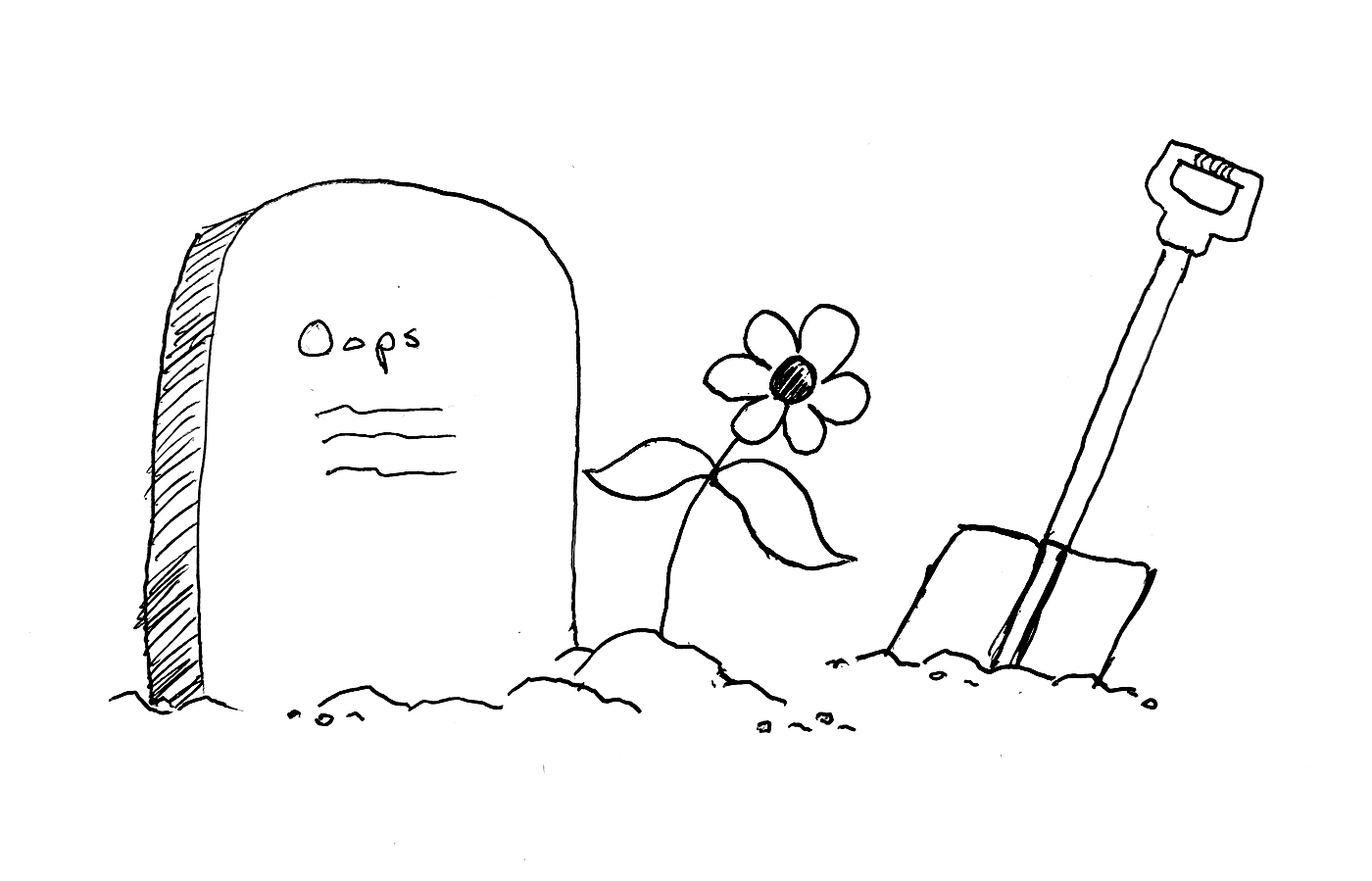
In my opinion, one of the hardest parts of being any sort of artist is the pressure we put on ourselves and on our work. As artists, we want to be gardeners, but instead we act like undertakers. We plant little seeds but then heap so much dirt on them that we make a cemetery rather than a forest.
It’s because we’re ambitious (shovel). We want to create meaningful, impactful things (shovel). We have high expectations (shovel) and good taste (shovel) and impatience (shovel), and our work keeps defiantly disappointing us (shovel) or falling short of our vision (shovel). And then of course, while we’re shoveling, the world in its casual indifference joins in until we’ve accidentally buried ourselves completely. We just wanted to grow something pretty, and now we’re choking on worm guts underground.
We all need ways to curtail the pressure, to ease the intensity of it all. We need to chill the f&$* out, but that’s easier said than done. After all, you know what absolutely categorically unequivocally never works when trying to calm someone down? Telling them to calm down.
To me, that’s where tricks come in.
As I was writing this, I realized just how many ways I trick myself in my creative process.
Most obviously, I pretend there’s an important deadline every single Monday. This has become a core part of my creative work. Every week, I’ve got seven days to produce something, and it’s due on Monday, or the client is going to be pissed (spoiler: there is no client). It’s amazing how helpful that structure is for me, even though it’s entirely made up.
Other examples: When I’m practicing a piano piece, I often pretend there are people in the room to increase the stakes of what I’m playing. When I’m in the editing stage of composing or producing a new track, I prefer to pretend I’m remixing someone else’s work rather than just editing my own. I’ve created characters in my head that I’ve labeled and talk to sometimes: “Thank you, Critic, for all you do. I know you’re trying to help, but also you know how the Kid is. If we don’t let him bash around and play for a bit, he’s going to throw a tantrum and sulk all week, even if what he makes isn’t really up to your standards.” < That’s me suspending judgment.
When I was learning how to do graphic design, a friend gave me some advice. He said, whenever doing a project for a client, always come up with three options. The reason is less because multiple options increases your chance for success, and more because if you’ve done three options, you’re less likely to be defensive and overly precious about any single one of them. You’ve tricked yourself into seeing multiple possible avenues, which then makes you more flexible to feedback and iteration. I now do that same thing with production by doing “Save as” so I can create a new version of the same idea in a low pressure way.
It’s almost like we’re in a high-volatility relationship with our work (and through it, ourselves). We love each other but we can also be so bitingly cruel. We need to bring in mediators occasionally who can push us back from the edge and help us find a better way forward. Tricking ourselves is a form of mediation, a way to hide the trail, to confound the ego a bit, and to let go.
There is something I love specifically about the idea of using characters. Maybe it comes back to how much I love fiction and storytelling. It’s this massive act of imagination that when done well uses make-believe to teach us about reality.
And coming up with the details can be so fun. I can imagine a girl named Jenny. I can give her a job, let’s say a failed-actress-turned-hair stylist, and a setting, an intergalactic strip mall in the middle of an exploded star system. I can make things happen, like she gets accidentally turned into a superhero after being hit by a blaster in an alien drive-by, and create tension, like that she isn’t sure what to do with her new powers.
And the wild thing is that even with something as outlandish and seemingly foreign as that, I can also still find parts of myself in her experience. I can resonate with how she’s wrestling with the lack of control in her life, about the way she experienced disappointment, and about how overwhelming this new opportunity thrust on her is. Because to misquote Walt Whitman (as channeled through a beautiful song by Ólafur Arnalds), we contain multitudes.
This morning, I tried on a character for the first time while playing piano. I played a song of mine that I’ve played a gazillion times before, but this time I played it as someone going through an unwanted break up. It was amazing how parts of the song took on a slightly different meaning with this added lens on them. Harmonies took on regret. The melody slowed slightly, not wanting to let go. The high notes became reaching and desperate. And the whole thing felt new and exciting because of it.
Give it a shot. Trick yourself a bit. Let me know what happens.
Happy pretending,
Ian
Ian Temple
Founder, Soundfly
ian@soundfly.com
Five Interesting Things
I mentioned my “weekly creative rhythm” above. I’ve been inviting people to join on the Soundfly Discord group. If you’re a subscriber and want to try it, check in on Discord on Monday morning, we’ll set a goal together, and then the week after share how each other did. (If you’re a subscriber without Discord access, ping me!)
“Playing in free-form requires more discipline than almost anything else. To avoid anything one must have a detailed knowledge of it.” That’s jazz drummer Elvin Jones from this collection of direct quotes compiled by Norman Grossman and shared by the Wiki Jazz substack.
“In having to write them, I learned how to think, I learned to think hard about something and then most importantly how to articulate what I thought about it.” Ryan Holiday talks about how writing is not only about good communication but also teaching you how to think. I agree. In fact, I think it’s more than that. It’s forcing you to be explicit in your thinking so you know what you actually mean. I wrote about it in my piece “Put it in words.”
“You should always be on a quest.” Hard agree. That’s how this piece by Chris Dalla Riva starts in which he describes his quest to listen to an album a day for 365 days. Excellent idea.
This:
Actually, you hit the spot dead-on with meditation - it's a way to trick your ego.
And I think all the strategies you bring up work ultimately aim at the same thing - trick yourself into getting out of your own way in the process. Lose the heavy self-seriousness and just play. Because, if you let go of it, what do you have to lose, really?